Monday Morning: The Brown Ring That Was Not New
First call of the week, a retail strip in Rockville. The tenant pointed at a coffee colored ring above the register and said it appeared overnight. On the roof, the story was different. The TPO seam directly above showed dirt tracking and a hairline split that had clearly been weeping for weeks. The ceiling tile only failed when it could not hold any more weight. This is the most common opening scene we see. The leak is rarely as fresh as the stain suggests.
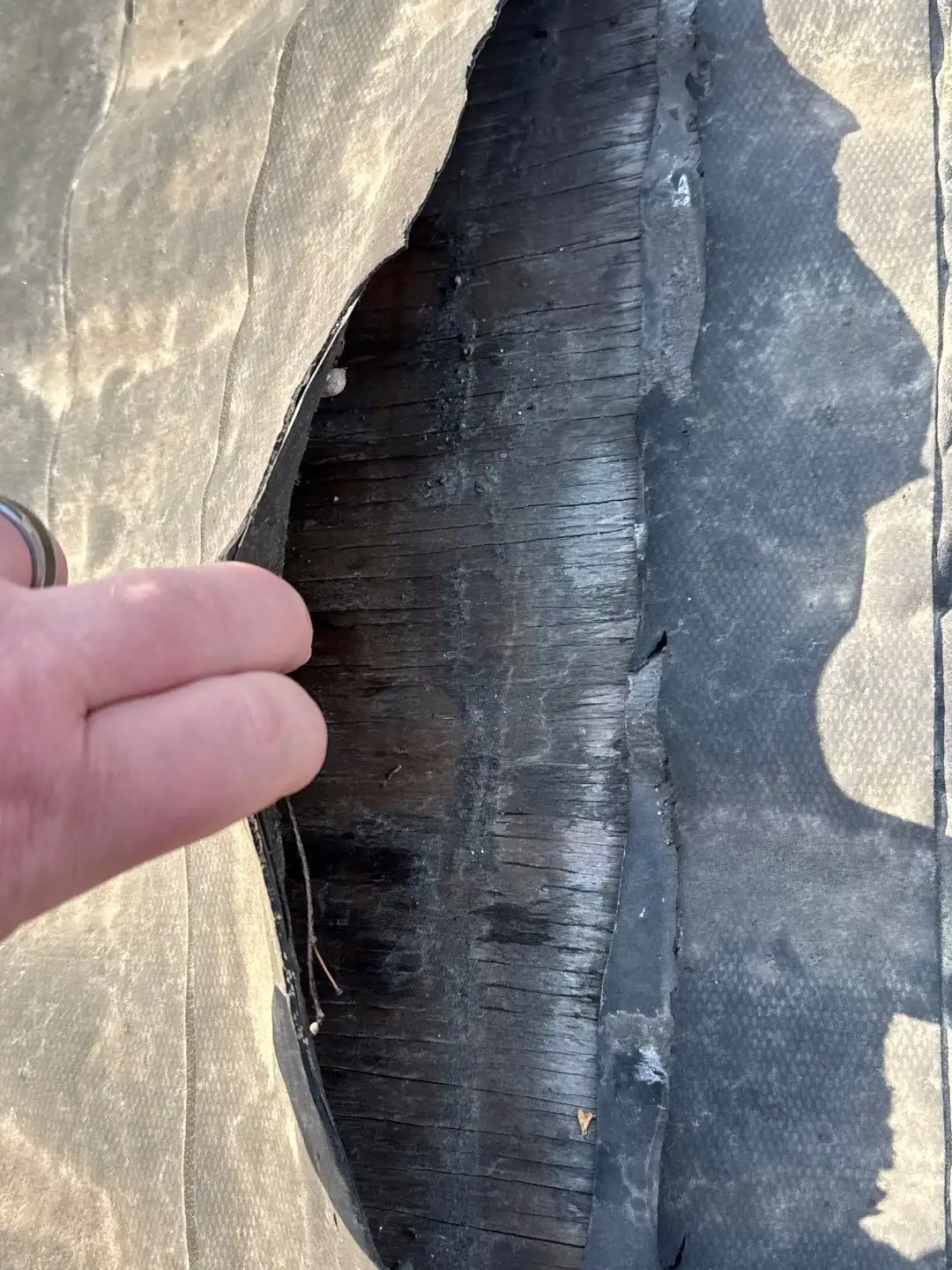
Decision on site: dry in the split with a compatible cover strip, probe the insulation through a small test cut, and schedule a return visit once we knew how far the wet insulation had spread. We pulled a two foot square of TPO and found saturated polyiso going about six feet out in three directions. That changed the repair from a seam patch to a partial tear off. We talked the owner through it on the phone before cutting anything bigger.
One detail worth noting for any property manager reading this. The tenant had reported a musty smell two months earlier and a maintenance tech wrote it off as HVAC. That smell was the wet insulation. If a tenant mentions odor changes near an exterior wall or under a roof penetration, treat it as a possible roof issue until proven otherwise. It is cheaper to send someone up with a moisture meter than to replace twelve sheets of polyiso.
Tuesday Afternoon: EPDM and a Ponding Problem
An older office building, ballasted EPDM, twenty plus years on the roof. The complaint was a drip near a conference room light. The cause was not the membrane itself but a clogged drain that had created a pond about thirty feet across. The water finally found a pinhole at a field seam and ran down a conduit into the ceiling.
This one needed two repairs. The pinhole got a primer and patch fix that afternoon to stop the active leak. The drain got cleared, and we flagged three more drains for the property manager. We also recommended a full commercial roof inspection before winter because EPDM at that age tends to fail in clusters once the first leak shows up. The owner asked the honest question: repair or replace? Our read was repair for now, budget for replacement inside three years. That is the kind of call we would rather make in May than in January.
The drain itself deserves a paragraph. The strainer dome was missing, probably knocked off by a previous HVAC contractor, and leaves had packed the bowl solid. A five dollar replacement dome and a quarterly drain check would have prevented the whole event. We see this pattern enough that we now photograph every drain on every visit and send the images with our invoice. It builds a record the owner can act on without us having to write a report every time.
Where the Money Actually Goes
Owners often ask why two leaks that look similar cost very different amounts. The answer is almost always what is underneath the membrane and how far the water traveled. A clean seam repair on a dry deck is cheap. A repair that includes saturated insulation removal, deck drying, and interior restoration is not.
Friday: Tracing a Leak That Was Not on the Roof
Last note of the week. A leak that looked like a roof problem turned out to be a failed HVAC condensate line in the attic plenum. We caught it because the stain pattern did not match any roof penetration above, and a moisture meter on the underside of the deck read dry. The owner saved several thousand dollars because we did not start cutting membrane. If you want a deeper read on how that detective work goes, the post on roof leak origin detection vs repair walks through the logic in more detail.
Thursday: The Repair That Should Have Been a Replacement
Sometimes the field notes write themselves. A modified bitumen roof, patched in six different colors of mastic over the last decade, finally gave up at a parapet wall. The owner wanted another patch. We told him directly that we could patch it, but the membrane was alligatored across most of the field and the next leak would be somewhere else within months. He chose a phased commercial roof replacement starting with the worst slope. Sometimes the most useful thing a crew can do is stop selling a repair.
For context, the cap sheet had lost most of its granules, the bitumen was crazed in a tight pattern that flexed under boot pressure, and two of the parapet counterflashings had pulled away from the wall. Any one of those is fixable. All three together on a roof past its design life means Rockville Commercial Roofing is just buying the owner a few months at a time. We laid out a two phase plan that let him keep the building operating while spreading the capital expense across two budget years.
Wednesday Night: The Emergency Call
Heavy rain, a warehouse in Rockville, water running down a column. On the phone we assessed severity, asked about active electrical concerns, and dispatched a crew with tarps and dry in material. When active water is moving inside a building, the first job is not the perfect repair. It is stopping the intrusion and protecting what is below. This is where commercial emergency roof repair work earns its keep. Tarps, peel and stick patches, temporary flashings around penetrations, whatever the membrane type asks for.
The cause turned out to be a failed pipe boot on a refrigerant line. Cheap component, expensive consequences. We replaced the boot the next morning in daylight, when we could actually see what we were doing and use proper adhesive cure times.
What We Look For Before Touching the Roof
- Stain shape and age: fresh edges versus old rings tell different stories
- Moisture meter readings on the deck underside in a grid pattern
- Drains, scuppers, and overflow paths, in that order
- Penetrations: pipe boots, curbs, vents, and anything mechanical added after install
- Seam condition and any visible splits, fishmouths, or lifted laps
- Ponding evidence and dirt tracking that points to flow paths
- Interior conditions directly below, including insulation, deck, and ceiling materials
- Recent trade work on the roof: solar, HVAC swaps, antenna installs, or satellite mounts